
Buying · April 8, 2025 · By Nadia Finch, Principal Broker
The old-house inspection checklist
I love old houses. I've also spent thirty years watching people fall in love with one and then pay for it. Here's what I'd check before you sign a contract on a house built before 1940.
The Hudson Valley has an extraordinary stock of old houses: Dutch stone houses from the 1700s, Federal and Greek Revival village houses, Italianates with mansard roofs, workers' cottages, farmhouses that have been added onto every forty years since the Revolution. Most of them have been well loved. Almost all of them have something going on that a new house wouldn't.
None of the items below is a reason not to buy an old house. They're reasons to know what you're buying, to price it in, and to negotiate with real numbers. In New York, your inspection usually happens in the short window between an accepted offer and signing the contract, so move quickly and book your inspectors the day your offer is accepted.
Start with a general inspector who likes old houses
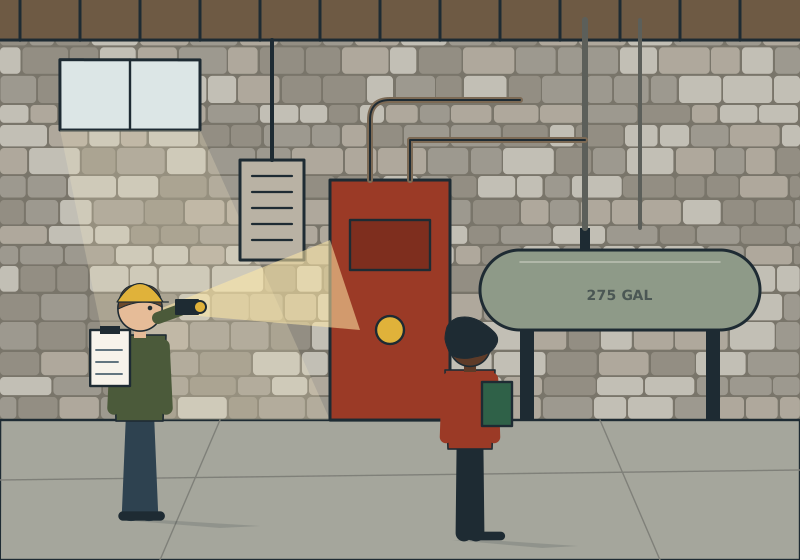
Ask your inspector how many pre-1900 houses they've done this year. A good old-house inspector won't panic at a fieldstone foundation or a little sag in a floor that's been sagging since 1880, and won't wave off a sill that's soft enough to push a screwdriver into. Go along. Bring a flashlight. Ask questions. The written report is useful; the conversation in the basement is more useful.
The structure
- Foundation. Fieldstone and rubble foundations are common and usually fine, but they're often damp in spring. Look for active water (efflorescence, puddles, a sump that runs constantly), bulging walls, and missing mortar. Ask whether there's a French drain or a sump pump, and how often it runs in March.
- Sills and framing. The sill plate, the big timber sitting on the foundation, is where old houses rot, especially under porches and at corners where the grade has crept up over the years. Probe it.
- Roof. Slate roofs can last a century or more but need a slate roofer to repair; ask the age and look for missing or slipped slates. Asphalt over old cedar shingles is common. Look at the attic underside of the roof for staining.
- Chimneys. Have a certified chimney sweep inspect every flue you plan to use, including the one the furnace vents into. Unlined chimneys and old clay liners may need relining before they're safe.
- If the inspector raises anything structural, hire a structural engineer for a focused visit. It typically costs a few hundred dollars, and their letter carries weight in a negotiation.
The systems
- Electrical. Look for knob-and-tube wiring (still live in more houses than you'd think), ungrounded outlets, a 60- or 100-amp service, and creative work by previous owners. Some insurers won't cover active knob-and-tube. Get an electrician's estimate if there's any doubt.
- Heating. Ask the fuel (oil, propane, gas, electric), the age of the boiler or furnace, and the last service date. Ask the seller for a year of fuel bills.
- Oil tanks. If the house has or ever had oil heat, find out where the tank is. Basement tanks are easy to inspect. A buried tank is a different matter: have a tank sweep done, and talk to your attorney about how a leaking tank would be handled.
- Plumbing. Galvanized steel supply lines narrow with age. Cast-iron drains crack. A camera scope of the main drain line to the street or septic is worth the cost.
The water and the waste
- Well. Test the water for bacteria, nitrates, and the common contaminants your lender and town require, and ask your tester whether to add arsenic, lead or other tests common in your area. Test the flow rate too: a well that yields one gallon a minute is a different house from one that yields ten.
- Septic. Have the system inspected by a septic contractor, not just a general inspector, and ask for the pumping records. A septic tank from 1974 can be fine; a failing leach field can cost tens of thousands of dollars to replace.
- Municipal water and sewer. In villages, ask about the age of the lateral line from the street to the house. Some older houses still have lead service lines.
The invisible things
- Radon. Many parts of the valley have elevated radon levels. Test. If it's high, a mitigation system is a routine fix.
- Lead paint. Any house built before 1978 must come with a lead-based paint disclosure, and you have the right to a lead inspection or risk assessment during a set period. In a house from 1890, assume there's lead under the paint somewhere, and plan renovations accordingly, especially with young children in the house.
- Asbestos. Old pipe insulation, boiler wrap, some floor tiles and some siding contain asbestos. Usually it's safe left alone and needs a licensed contractor to remove.
- Insects and animals. Powder-post beetles, carpenter ants, bats in the attic. A wood-destroying-insect inspection is inexpensive.
The paperwork
- The seller's Property Condition Disclosure Statement, which New York sellers effectively must provide.
- Permits and certificates of occupancy for additions, finished basements and new bathrooms. Unpermitted work is common in old houses and can complicate a sale or a refinance.
- Whether the house is in a historic district, which may require approval before you change windows, siding or a porch.
- A survey, if there isn't a recent one. Old stone walls are often not where the property line is.
Then: decide what matters
After the inspections, sit down with your agent and sort the findings into three piles: safety (fix now), money (things that will cost you in the next five years), and character (the sloping floor, the drafty windows, the door that sticks in August). Negotiate on the first two. Learn to love the third.
And if you'd like someone to walk through an old house with you before you even make an offer, call me. I still carry the flashlight. (845) 555-0131.
This checklist is general information, not a substitute for a professional inspection or legal advice. Requirements and recommended tests vary by town and property; ask your inspector, lender and attorney.