
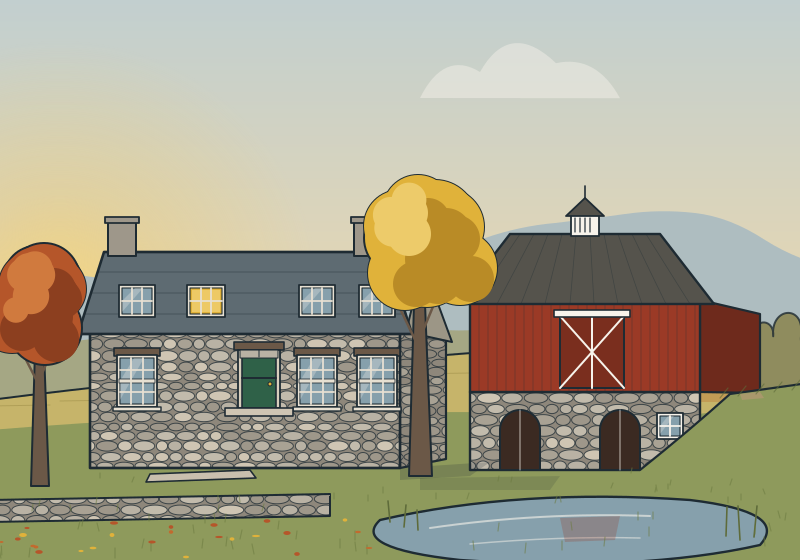
$1,450,000
2240 Old Mill Farm Road, Stone Ridge
4 bd · 3 ba · 3,100 sq ft · 38 ac
Land & farms
A field with a view is the easy part. What you can build on it, how you'll get water, where the septic can go and what the deed lets you do are the questions that decide whether it's a good purchase. Eli Brandt has spent most of his career on them.
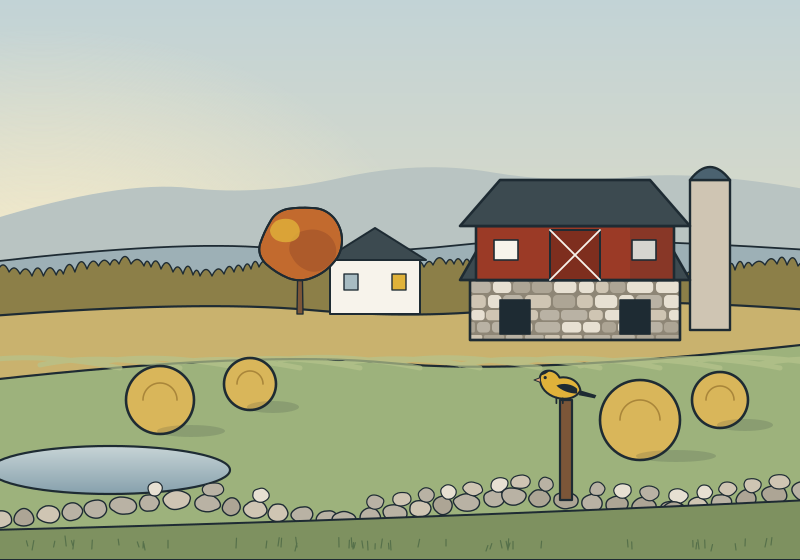
With a house, the inspection tells you most of what you need to know. With land, nothing has been proven yet. A beautiful six-acre parcel might not pass a perc test, might need a 1,200-foot driveway to reach a buildable spot, or might sit under a conservation easement that limits you to one house in a particular place. None of that shows up in a photo.
So we work differently. Eli walks every parcel before we show it, usually with a printout of the tax map, the soil survey and the flood map. He'll tell you where the wet spots are, where the old logging road ran, and which neighbor has the right of way. He has driven the same 2004 pickup down most of the farm roads in Ulster County and knows which ones wash out.
Almost all rural land here relies on an on-site septic system, and whether you can put one in decides whether you can build. Before a county health department approves a system, an engineer digs a deep test hole to look at soil layers and groundwater, and runs a percolation test: how fast water drains into the soil. Too slow (heavy clay) or too fast (gravel over bedrock), or groundwater too close to the surface, and a conventional system won't be approved. Engineered or raised systems can often solve the problem, at a cost of tens of thousands of dollars more.
When a listing says "perc tested", ask for the results and the date, the engineer's name, and where on the lot the test was done. A passing test at the bottom of the hill doesn't help if you want to build at the top. Lot 7 on Shawangunk View Road in Gardiner ($189,000, 6.2 acres) has passing results at the upper meadow, where the house would go, and power at the road; we'll share the paperwork.
On an existing farmhouse, the septic may be decades old. Ask when it was last pumped, have it inspected, and find out whether the system was ever permitted. Old farm systems sometimes turn out to be a buried tank with no field at all.
Out here, water comes from a drilled well. For an existing house, test two things: the flow rate (how many gallons a minute the well produces, and whether it holds up over several hours of pumping) and the quality (bacteria, nitrates, and depending on the area, arsenic, iron, manganese, hardness and radon in water). Lenders usually require a bacteria test at least; we recommend the full panel.
For bare land, nobody can promise what a new well will find. Neighbors' well depths give a rough idea, and the state keeps records of many wells drilled since 2000. Budget a range, not a number: a shallow well with good flow costs far less than a 500-foot hole into dry bedrock.
Springs, ponds and streams are lovely and sometimes useful for livestock, but they are rarely an approved drinking-water source for a new house.
New York lets farmland be taxed on its agricultural value rather than its market value, which can lower the land portion of a tax bill a great deal. In general, the land must be at least seven acres and produce at least $10,000 a year in average gross sales of farm products over the previous two years, though smaller, high-value operations can qualify at higher sales levels. You don't have to farm it yourself: many owners lease their fields to a neighboring farmer for hay or crops, and the farmer's sales count.
The application goes to the town assessor each year, with a soil group worksheet from the county. Two cautions. First, the house and its yard are never included; only the farmed land. Second, if you convert land that received the assessment to a non-farm use within a set number of years, you owe a payback, called a conversion penalty. Ask the seller's attorney for the history.
2240 Old Mill Farm Road in Stone Ridge ($1,450,000, 38 acres) currently receives an agricultural assessment on its hay fields, which a local farmer cuts twice a summer under a handshake arrangement the seller expects to continue. Because it's over $1,000,000, the buyer would also owe the 1% state "mansion tax" at closing, $14,500 at the asking price.
Many of our rural parcels also sit inside a state-certified agricultural district. New York requires a notice in the contract telling you so: farming practices nearby (manure spreading, early tractors, the smell in May) are protected, and you're buying next to them on purpose.
The stone walls you'll see running through the woods were property lines once, and sometimes still are. Sometimes they aren't. Old deeds describe boundaries by "a white oak" and "the corner of Van Wagenen's wall". Get a current survey, have the corners staked, and walk them. A title insurance policy without a survey usually excludes boundary problems.
Eli's rule is that he'll walk the property line with you in any weather, including the rain. It's the best hour you'll spend before an offer.
Bare land is harder to finance than a house. Many lenders want 25% to 50% down on a lot, a shorter loan term and a higher rate, and some won't lend on raw land at all. Local banks and farm credit lenders tend to be the most comfortable with it. A construction loan that converts to a mortgage is common once you have plans and a builder. Farm purchases with real agricultural income may qualify for specialized farm lending; that's a conversation with a lender who does it regularly.
Off-grid or solar-heavy houses, like the timber frame at 12 Clove Rock Road in Marbletown ($899,000, 9 acres, with a waterfall on the property), appraise fine when there's still a grid connection. Fully off-grid houses can be harder; tell your lender early.
2240 Old Mill Farm Road, Stone Ridge
4 bd · 3 ba · 3,100 sq ft · 38 ac
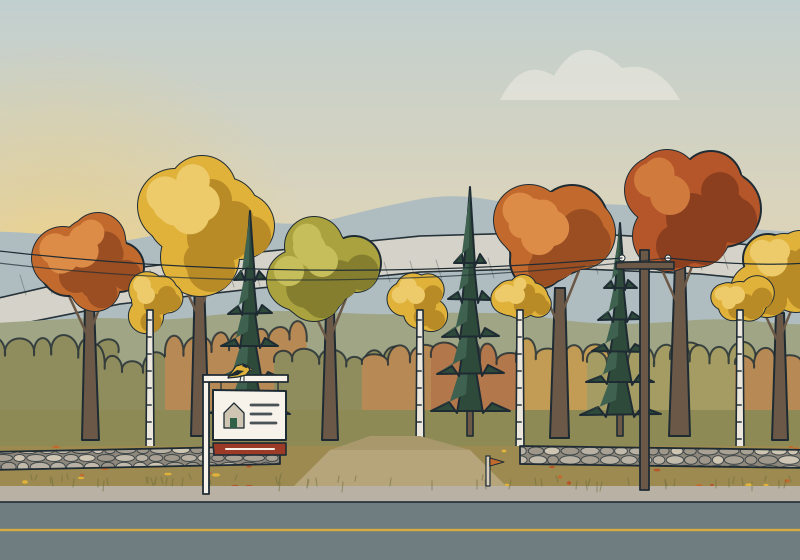
Lot 7, Shawangunk View Road, Gardiner
Land · 6.2 ac
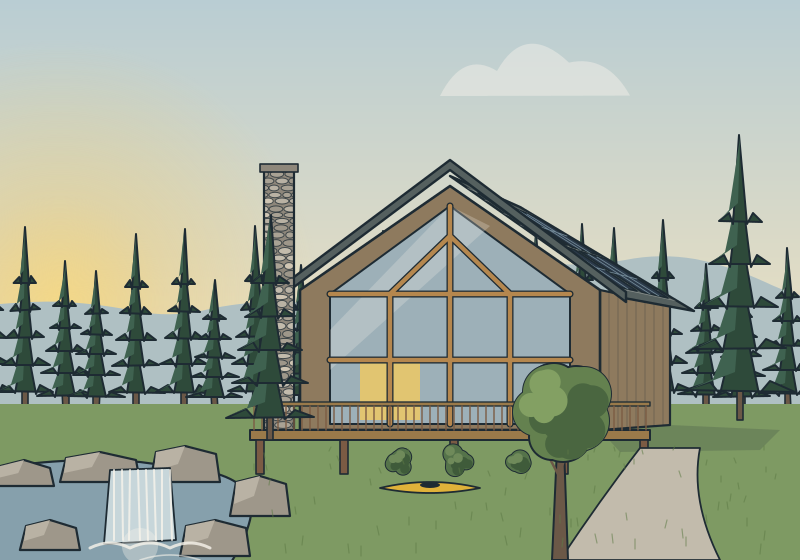
12 Clove Rock Road, Marbletown
3 bd · 2 ba · 2,300 sq ft · 9 ac
Deed, survey, tax map, perc and deep-hole results, any easements, the most recent tax bill and any agricultural assessment history.
Zoning, minimum lot size, frontage, setbacks, and whether a subdivision was ever approved. Some towns have ridgeline or scenic overlay rules.
A long driveway and a run of utility poles can cost as much as the land.
Your attorney can make the contract subject to a satisfactory perc test, survey and building permit. Sellers of good land don't always agree, but it's worth asking.
Once in leaf, once in mud season if you can. March tells the truth about drainage.
Call Eli at the Kingston office, (845) 555-0190.