
Staging & prep
Getting the house ready
The first showing of your house happens on a phone, in a photograph. The second happens at the front door. A few weeks of the right work, done in the right order, makes both go better.

It starts with a walk-through
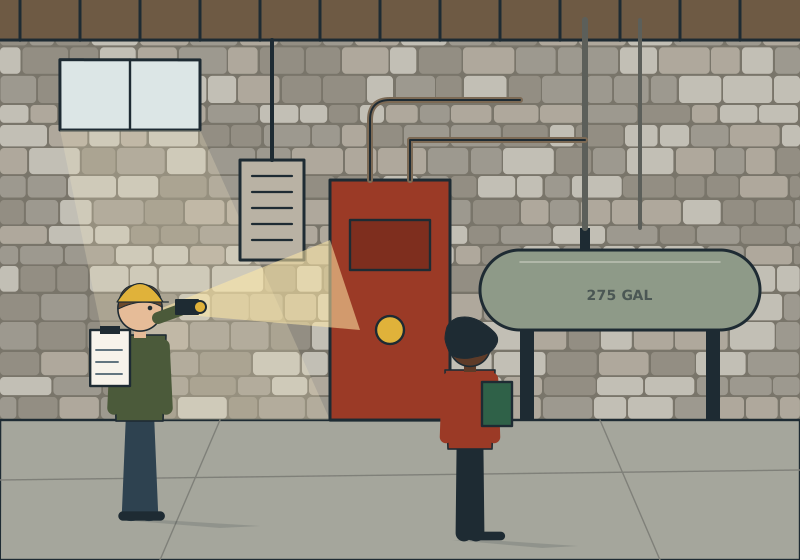
Before anything else, your agent walks the house with you, inside and out, with a notebook. Nadia trained as an architect and still does it the way she was taught: from the curb inward, the way a buyer arrives. What do you see from the street? What does the front door feel like to open? Where does the eye go when you step inside? Which room smells like the dog?
You get a written list within a couple of days, sorted into three groups:
- Do before photos
- Things buyers will see in pictures or notice in the first minute: clutter, dark rooms, a peeling front door, an overgrown path, stained ceiling tiles, a dated light fixture over the dining table.
- Do before listing
- Things an inspector will find and a buyer's attorney will ask for: a dripping tap, a missing GFCI outlet, a broken window sash, gutters full of leaves, a loose railing.
- Think about
- Larger items where we'll give you an honest view of whether you'll get the money back: refinishing floors, painting the whole interior, a new roof, replacing an oil tank.
What tends to pay for itself
In our experience selling around 100 listings a year, these are the improvements that most often come back at the sale, roughly in order:
- Cleaning and decluttering
Free, or nearly. Take out a third of what's in each room, including the closets; buyers open them.
- Paint
A light, warm neutral on walls that need it, and the front door. In old houses, fresh white trim goes a long way.
- Light
Bright bulbs of the same color temperature in every fixture; clean windows; curtains open.
- Small repairs
Everything on the "before listing" list. A buyer who sees ten small problems assumes there are a hundred.
- Floors
Refinishing old wood floors or replacing worn carpet with a simple floor often returns more than it costs.
- The approach
Cut back shrubs, edge the path, put a pot by the door, fix the mailbox. In fall, rake. In winter, shovel wider than you need to.
What rarely pays: a full kitchen or bath renovation right before listing. Buyers have their own ideas, and you'll be living in a construction site while you try to sell.
Fieldstone Prep: repairs now, paid at closing
Plenty of sellers know the house needs work and don't have the cash, or the time, to do it before they list. Fieldstone Prep is our answer. We coordinate the pre-listing work with local tradespeople we've used for years, and you pay for it at closing, from the sale proceeds.
- What it covers: painting, floor refinishing, minor carpentry and plumbing, electrical fixes, landscaping and cleanup, dumpster and junk removal, deep cleaning, staging. Typical projects run $4,000 to $25,000.
- What it costs: the tradespeople's invoices, at their prices. We don't mark them up, and there's no interest. You approve every estimate before work starts.
- When you pay: at closing, from your proceeds, as a line on the settlement statement.
- If the house doesn't sell: if you take it off the market or the listing ends, the balance is due within 90 days. That's the one catch, and it's in the agreement in plain words.
- Who manages it: your agent and our office coordinator, who schedules the work and sends photos as it's done, so you don't have to be there.
Fieldstone Prep is available to sellers who list with us. It isn't a loan from a bank and there's no credit check, though we do need your attorney to confirm the proceeds will cover it.
Staging
Staging isn't decorating. It's arranging a house so buyers can see the rooms rather than your things, and so the photographs read clearly. We work with a small network of independent stagers in Dutchess, Ulster and Columbia counties. They range from a consult-only visit, where a stager rearranges what you have and tells you what to remove, to full staging of an empty house with rented furniture.
| Option | What happens | Typical cost here |
|---|---|---|
| Consultation | Two hours with a stager, a room-by-room list, some rearranging on the spot | $300–$500 |
| Partial staging (occupied) | Your furniture, edited, plus rented rugs, lamps, art, linens and a few pieces | $1,500–$4,000 |
| Full staging (vacant) | Furniture for the main rooms and primary bedroom, for the first 60 days | $3,500–$9,000 |
A vacant old house almost always benefits from staging: empty rooms look smaller, and the odd corners of a farmhouse or Victorian are hard to understand without furniture. Staging can be paid through Fieldstone Prep.
Photography, floor plans and video
Every listing gets a professional photographer, booked for the right light. River-view houses are often shot in late afternoon; north-facing Victorians in the middle of the day. We hold the shoot if it's raining unless the house looks good in rain (some do). A typical listing has 30 to 45 photographs, a measured floor plan and, where it helps, aerial shots of the land and short video.
Our rules for photos are simple. Wide-angle lenses, but not so wide that rooms look like a hotel lobby. No virtual furniture unless clearly labeled. No sky replacement that makes October look like June. If the barn is falling down, there's a photo of the barn falling down, with a caption. Buyers who feel misled by photos arrive annoyed and leave quickly.
A three-week prep plan
- Week 1
Walk-through and list. Book trades through Fieldstone Prep if you're using it. Start clearing closets, attic and basement. Order a pre-listing septic pump-out if you're on septic.
- Week 2
Repairs and paint. Floors last. Stager's consultation. Landscaping and gutters.
- Week 3
Deep clean, staging installed, windows washed. Photography at the end of the week. Disclosure form finished with your agent and reviewed by your attorney.
Showing-day checklist
- Lights on in every room, including closets and the basement.
- Blinds up, curtains open, toilet seats down.
- Thermostat at a comfortable temperature, even if the house is vacant.
- Pets out, with their bowls and beds.
- Valuables, prescriptions and personal papers put away.
- Path to the front door clear (in winter: shoveled, salted, and the porch light on).
- Leave the binder out: utility bills, the septic record, the roof receipt, the survey.
Questions about getting ready? Call the Beacon office at (845) 555-0127.